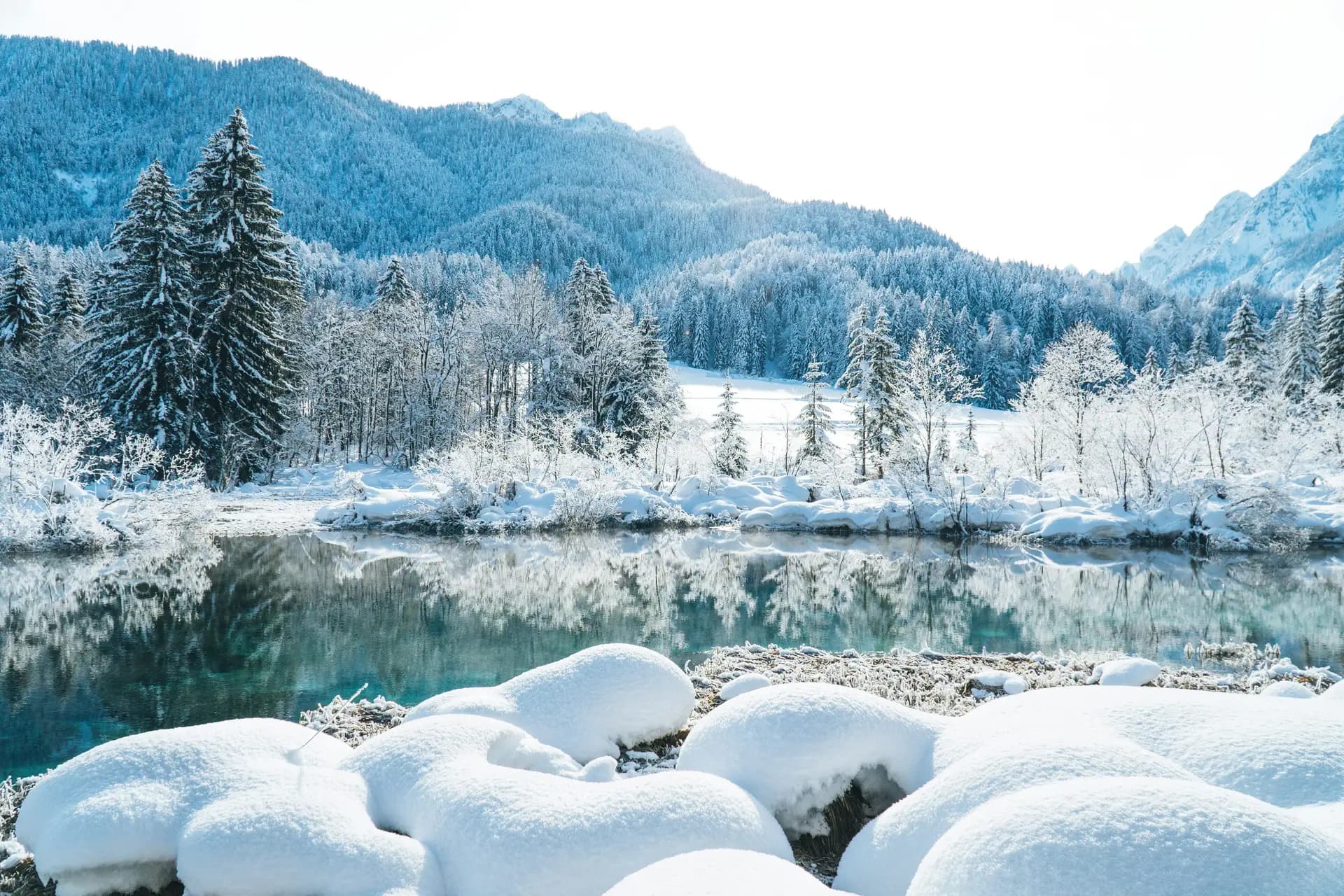
When the snow comes to Kranjska Gora, the valley narrows to its essentials — white peaks, woodsmoke, and the particular quiet that arrives only at altitude.
Winter arrives early in the upper Sava valley. By December the peaks above Kranjska Gora are white to the treeline, the lakes hold a skin of ice, and the village settles into the unhurried rhythm of a place that has done this for centuries. This is the Julian Alps at their most elemental — and, for those who know when to come, at their most rewarding.
The skiing is the obvious draw. Kranjska Gora's pistes run gently for families and seriously enough to have hosted the World Cup; a short drive over the Vršič pass region opens still more. But the better secret is what happens between the runs: cross-country trails threading silent forest, frozen Lake Jasna with its bronze ibex keeping watch, and afternoons that end early and indoors, around a fire.
The only real obligation is to be warm and unhurried while the valley goes quiet around you.
A few practical notes. The season holds reliably from late December through March, with February the surest for snow. Winter tyres are mandatory on Slovenian roads in the cold months, and chains are wise for the higher passes. Pack for contrast — bright, dry cold by day, deep dark by five — and leave room in the schedule for doing very little.
Because that, in the end, is what the Alps in winter offer that summer cannot: permission to slow down. The light is short, the snow muffles everything, and the only real obligation is to be warm and unhurried while the valley goes quiet around you.
Stay nearby
Jasna MansionDiscover →